
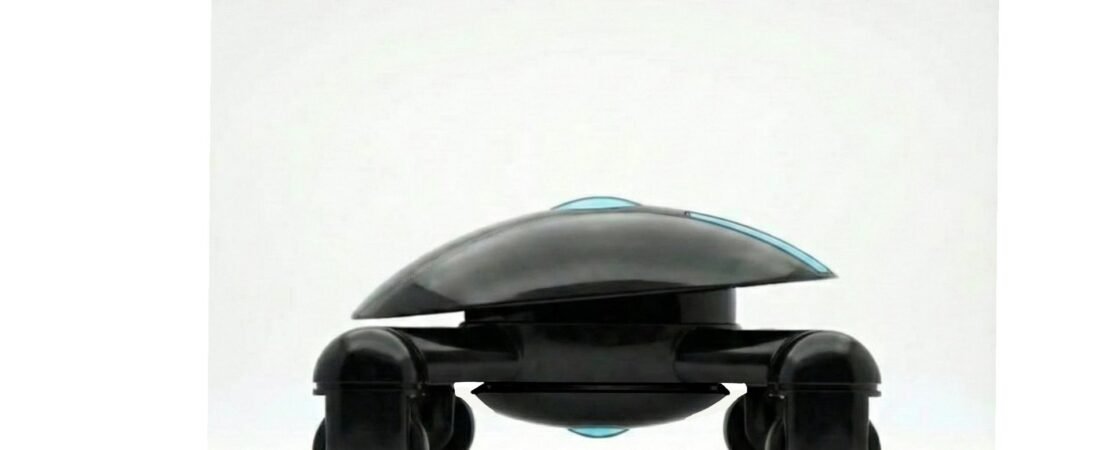
The SR-X isn’t built on a chassis; it is grown around a nervous system. To understand how it moves, you have to understand its anatomy. This is not a list of car parts. It is a breakdown of the ten distinct modules that fuse together to create the world’s first Sentient Exoskeleton.
Here is the checklist of the systems we will be declassifying in the coming weeks.
1. THE DOME (The Shell)
The Component: An aerodynamic, armored carapace that replaces the traditional roof and windshield.
Key Features:
The Canopy: A solid, windowless composite shell designed for maximum impact resistance.
The Dorsal Hump: A specialized aerodynamic housing on the spine that docks the H.A.L.O. aerial unit.
The Rear Hatch: An integrated active-aero awning that lifts to form the roof of the deployable “Backporch.”
2. THE ENDO-FRAME (The Skeleton)
The Component: A tubular monocoque “Ribcage” that serves as the mounting point for all mission hardware.
Key Features:
The Tub: A deep-welled, armored keel that houses the pilot and power systems low to the ground.
The Ribs: Four massive structural towers that channel impact energy away from the cockpit.
System Mounts: Integrated hardpoints for the H.A.L.O. (Sky), L.A.L.O. (Ground), M.A.C.R.O. (Hands), and A.E.R.O. (Entry) modules.
3. THE DEFLECTORS (The Skin)
The Component: Modular, sacrificial body panels designed to absorb punishment so the frame doesn’t have to.
Key Features:
Smart-Hatch Access: Touch-sensitive exterior maintenance panels that display system health before you open them.
Aero-Armor: Panels that function as both ballistic shielding and airflow management.
4. THE CORE (The Energy)
The Component: A radical departure from flat “skateboard” batteries. A turbine-shaped energy matrix.
Key Features:
Conical Revolver: A motorized rotary magazine that slots Kilo-Brick cartridges at a downward angle to maximize density.
The Collector Hub: The hollow center of the revolver that nests the L.A.L.O. drone, protecting it inside a ring of energy.
5. THE OUTRIGGERS (The Muscles)
The Component: High-travel active suspension arms that isolate the chassis from the terrain.
Key Features:
Equal-Length Geometry: Maintains zero camber throughout the entire travel range.
Active-Leveling: Keeps the central Tub flat while the wheels thrash over boulders (The “Chicken Head” Effect).
6. THE PYLONS (The Knees)
The Component: Vertical articulation housings that connect the suspension to the drive units.
Key Features:
Vector-Slew Steering: Replaces the steering rack with 360-degree rotation bearings.
Slide-Dock Damping: Internal linear slides that absorb vertical shock frequencies before they reach the frame.
7. THE THRUSTERS (The Feet)
The Component: Four independent propulsion units. No axles. No differentials.
Key Features:
Perimeter Drive: 21-inch hubless motors that provide instantaneous torque at the wheel rim.
Vector Propulsion: Capable of “Push/Pull” thrust management, eliminating the need for a physical reverse gear.
8. THE PARALLAX (The Senses)
The Component: The digital reality that fills the windowless cockpit.
Key Features:
God-Mode Display: Dual-layer holography that erases structural pillars and allows for simulated environments (Snow, Space, Deep Sea).
Amniotic Buffer: A high-volume, low-pressure airbag system that fills the cabin void to “cocoon” the pilot in a crash.
9. THE BIOPACK (The Interface)
The Component: The bionic control hub.
Key Features:
The ExoSeat: The operator’s anatomical support exoskeleton.
SymDock: The motion platform that isolates the Symbiote operator.
Neuro-Gauntlets: Haptic “Phantom Grip” gloves that replace steering control.
Next post:
“It all starts with the ExoSeat, comfort and control are one.”